
SQT Bio Microneedling vs RF Microneedling vs Chemical Peels: Best Skin Treatment For Acne Scars Australia

Acne scarring can look and behave differently depending on scar type, skin tone, sensitivity, and how your skin heals, so treatment choice is usually about fit rather than intensity. SQT Bio Microneedling, RF microneedling, and chemical peels each work in different ways and tend to suit different priorities, whether that’s texture change, uneven tone, or overall skin renewal.
A practical way to decide is to consider the depth of the concern, the recovery time you can manage, and how reactive your skin is. Chemical peels often focus more on surface resurfacing and tone, while microneedling approaches are commonly used when texture and indented scarring are a bigger focus. Results are typically gradual and often improve over a course of treatments, with aftercare and spacing playing a big role in how the skin responds.
SQT, RF Microneedling, And Chemical Peels For Acne Scars
Acne scars can sit at different depths, show up in different shapes and colours, and behave differently depending on your skin type and how your skin heals. That’s why one “best” option rarely fits everyone. Our provider clinics look at what you’re trying to change (texture, pigment, active breakouts, or a mix), then match the treatment approach to that goal.
When people search for the best skin treatment for acne scars in Australia, they’re often comparing three categories: SQT Bio Microneedling, RF microneedling, and chemical peels. Each works differently, with distinct recovery patterns and strengths depending on the type of scarring you’re treating.
SQT Bio Microneedling: What It Targets
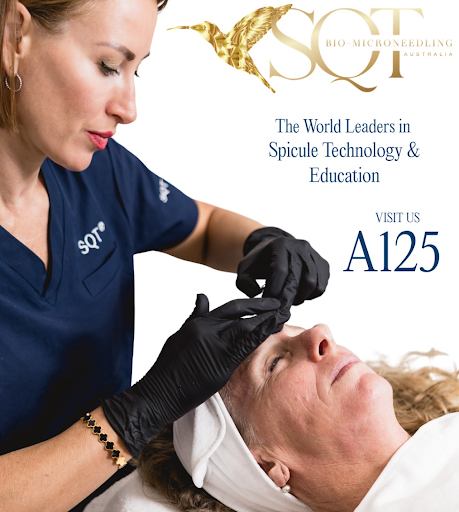
SQT Bio Microneedling is a device-free treatment that uses natural spongilla spicules from freshwater sponges. Rather than relying on needles or heat, it works through controlled micro-channels that support skin renewal. In practical terms, we use it when the goal is to improve uneven texture, post-acne marks, and early lines while keeping the approach conservative and skin-focused without the risks.
If you’re weighing up SQT vs skin needling, you’ll find that the key difference is the mechanism. Traditional needling uses needles via a machine to create micro-injuries, while SQT uses spicules to support renewal without a device nor harsh chemicals or acids. SQT is also commonly delivered through different treatment sets, including Resurfacing & Repair, Revitalising & Depigmentation, Nourish & Hydrate, and Anti-Ageing. SQT is recommended for active acne, safe for all Fitzpatrick types and can be used on all body areas - including the delicate undereyes.
RF Microneedling: When It’s Usually Chosen
RF microneedling combines microneedling with radiofrequency energy. That energy creates controlled heat at depth, which is why it’s often discussed in the context of firmness and more structural change. For some people with acne scarring, that depth-based approach can be useful, particularly when texture change is the priority and downtime is acceptable.
When clients ask about RF microneedling vs SQT, we frame it as a choice between heat-based treatment response and a device-free renewal approach. RF microneedling isn’t automatically the better fit for every scar type, and it’s not automatically the right option for reactive or darker skin types. The right choice depends on your skin’s tolerance, your schedule, and what you’re trying to shift first.
Chemical Peels: Best Fit For Surface Texture And Tone
Chemical peels are typically used for surface-level exfoliation and controlled resurfacing. They can help with dullness, uneven tone, congestion, and some post-acne marks, especially when pigment is involved. Peels can also be a useful stepping stone when someone isn’t ready for deeper treatments, or when we want to improve the skin’s overall clarity before moving into or part of a more intensive plan.
If you’re comparing chemical peel vs microneedling in Australia, it helps to think about depth. Peels generally focus on the surface and near-surface layers, while microneedling approaches are used when texture change and scar remodelling are the priority. Peel strength, skin prep, and aftercare matter a lot, and not every peel is appropriate for every skin tone or sensitivity profile.
Results: Matching Treatment To Scar Type And Skin Type
Acne scarring isn’t one thing. Some scars are shallow and discoloured, some are indented, and some are a mix of texture and pigment. We usually start by identifying what’s most visible in your day-to-day lighting, then build a plan that targets that first. For many people, the best skin treatment for acne scars in Australia is the one that matches their scar type and skin tolerance, not the one that sounds the most intense.
This is also where SQT vs skin needling becomes a practical question. If your skin is easily reactive or you’re balancing acne scarring with pigment concerns, a conservative approach that supports renewal without overstimulating the skin can be a better starting point. We also look at whether you’re treating active acne at the same time, because that changes the pacing and product support.
Depth And Recovery Time: What To Expect
Recovery is one of the biggest decision points, especially if you’ve got work or events, or you simply don’t want to manage visible peeling. SQT is often described as having a medium recovery window, with redness, sensitivity, and possible peeling that can vary from person to person. RF microneedling is often discussed with a similar multi-day recovery pattern, with the added factor of heat-based response and more uncomfortable during.
If you’re weighing chemical peel vs microneedling in Australia, you’ll find that downtime can be unpredictable because peel depth and skin response vary. In the same way, RF microneedling vs SQT isn’t just about results, it’s also about what recovery you can realistically manage. We keep aftercare simple and protective, and we plan treatments around your calendar rather than forcing a one-size schedule.
Choosing Between SQT Vs Skin Needling
When people compare SQT to traditional microneedling, they’re usually trying to answer a simple question: which one makes sense for their skin right now? We approach that by looking at your scar pattern, your sensitivity history, and whether pigment or acne is part of the concern. We also look at how your skin behaves after active breakouts, as some skin types rebound quickly, while others remain inflamed for longer.
If you’re searching SQT vs skin needling because you want a device-needle free option, SQT can be appealing for that reason alone. It’s still a controlled treatment that creates micro-channels, so we don’t treat it like a “zero recovery” facial. The goal is steady improvement over a course of treatments, with a plan that respects your barrier and your lifestyle.
Comparing RF Microneedling Vs SQT
Both RF microneedling and SQT fall under the skin renewal category, but they get there in different ways. RF uses energy and heat at depth, while SQT uses spicules to support renewal without a device nor skin breakage. That difference matters if you’ve got reactive skin, if you’re cautious about heat-based treatments, or if you’re balancing acne scarring with uneven tone.
When we talk through RF microneedling vs SQT, we keep it decision-focused. We map out what you’re trying to change first, what you can tolerate, and how you want your skin to look between sessions. We also keep expectations realistic, because results are usually progressive and many people do best with a series of minimum three rather than a single appointment.
Understanding Chemical Peel Vs Microneedling Australia
A peel can be a great option when the main issue is surface dullness, congestion, or post-acne marks that sit closer to the surface. Microneedling approaches are often chosen when texture and indented scarring are the bigger concern. In practice, we don’t treat this as a rivalry, we treat it as a toolkit.
If you’re searching for chemical peel vs microneedling in Australia, the most useful question is which layer you’re trying to change. From there, we can decide whether a peel is the right starting point, whether microneedling is more appropriate, or whether spacing the two approaches makes sense. The safest plans are those that respect your skin’s recovery capacity, not those that ramp intensity too quickly.
A good plan for acne scarring usually starts with clarity on scar type, skin tolerance, and downtime, then builds a course that’s realistic to complete. If you’re unsure where to start, keep it simple: choose the approach that matches your skin’s needs now, then adjust as your skin responds. That’s often the most reliable way to find the best acne scar treatment in Australia for you.
Learn more with SQT Australia and choose a treatment path that fits your skin, schedule, and goals.


Comments